What Fitness Equipment Does Your Gym Actually Need?
Starting a gym or refreshing your studio's equipment list can feel overwhelming. There are too many options, wildly varying price points, and no shortage of salespeople telling you everything is essential. The truth is, the best-equipped gym isn't the one with the most machines. It's the one whose equipment matches its members' goals and fits naturally into the space.
Here's a practical guide to help you think it through.
Know Your Space Before You Buy Anything
Before you browse a single catalogue, measure your floor space — and be honest about it. Equipment showrooms are designed to make machines look smaller than they are. In your gym, you need to account for:
- Safe clearance zones around each piece of equipment (typically 1–1.5 metres on all sides)
- Traffic flow - how members move between stations without creating bottlenecks
- Ceiling height, especially if you're considering cable machines, battle ropes, or jump training
- Electrical outlets, which determine where cardio machines with powered displays or fans can go
A common mistake is filling every corner and then realising members feel cramped. Breathing room in a gym isn't wasted space — it's part of the experience.
Define Your Budget, Including the Hidden Costs
Equipment purchasing is a capital investment, and it's easy to underestimate the full cost. Beyond the sticker price, factor in:
- Delivery and installation - commercial equipment is heavy and often requires professional setup
- Regular maintenance contracts - treadmill belts, cable replacements, and upholstery repairs add up
- Warranties - a cheaper machine without a solid warranty can cost more in the long run
- Replacement cycle - commercial-grade equipment lasts 7–10 years with proper care; consumer-grade, far less
Prioritise quality on the equipment your members will use most. It's better to have fewer, better pieces than a floor full of machines that break down or collect dust.
Understand Your Members First
Your equipment list should follow your members' goals, not the other way around. Think about who is actually walking through your door:
If you run a CrossFit box or functional fitness studio, your members want barbells, pull-up rigs, kettlebells, and open floor space. Heavy cardio machines may go largely unused.
If you run a yoga or Pilates studio, mats, blocks, reformers, and resistance bands are your core investment. Strength machines have no place here.
If you run a general fitness gym, you need a broader mix - cardio machines, a free weights area, and a selection of resistance machines to cater to different goals and experience levels.
When in doubt, ask your members. A simple survey before a refresh can save thousands in misallocated spend.
Always Choose Commercial-Grade Equipment
The difference between commercial and consumer equipment isn't just durability; it's safety. Commercial equipment is engineered for repeated daily use by people of varying sizes, fitness levels, and movement patterns. Consumer equipment is not.
When evaluating brands, look for:
- Weight ratings that comfortably exceed your heaviest members.
- Frame warranties of at least 10 years for strength equipment.
- Service networks in your area - a brand that no local technician can service is a liability.
- Ergonomic adjustability so the equipment works for a wide range of body types.
Reputable commercial brands include Life Fitness, Technogym, Matrix, and Precor, among others. Read reviews from other gym owners(not just fitness enthusiasts) before committing.
The Core Equipment Categories

Cardio Equipment
Cardio is often the first thing new members head for, and the first thing they notice if it's out of order. A reliable cardio floor builds confidence in your gym from day one.
The staples: treadmills, stationary bikes, ellipticals, and rowing machines. For smaller studios, assault bikes and ski ergs offer high-impact options with a smaller footprint. Prioritise machines with simple interfaces - the more buttons, the more confusion and the more things that can break.
Strength and Resistance Machines
Resistance machines are ideal for members who are newer to training. They provide guided movement patterns that reduce injury risk and build confidence. A well-chosen selection covers major muscle groups: chest, back, shoulders, legs, and core.
You don't need one machine per exercise. Look for multi-functional cable systems and adjustable benches that cover multiple movement patterns without doubling your floor space.
Free Weights
A free weights area is non-negotiable for most gyms. Dumbbells, barbells, and a squat rack (or power cage) form the backbone of strength training for intermediate and advanced members.
Invest in a quality dumbbell range (typically 2.5kg–40kg for most studios), a solid barbell set, and weight plates with enough variety for progressive loading. Rubber-coated or hex dumbbells are worth the extra cost — they're quieter, safer, and far more durable on your floors.
Functional Fitness Equipment
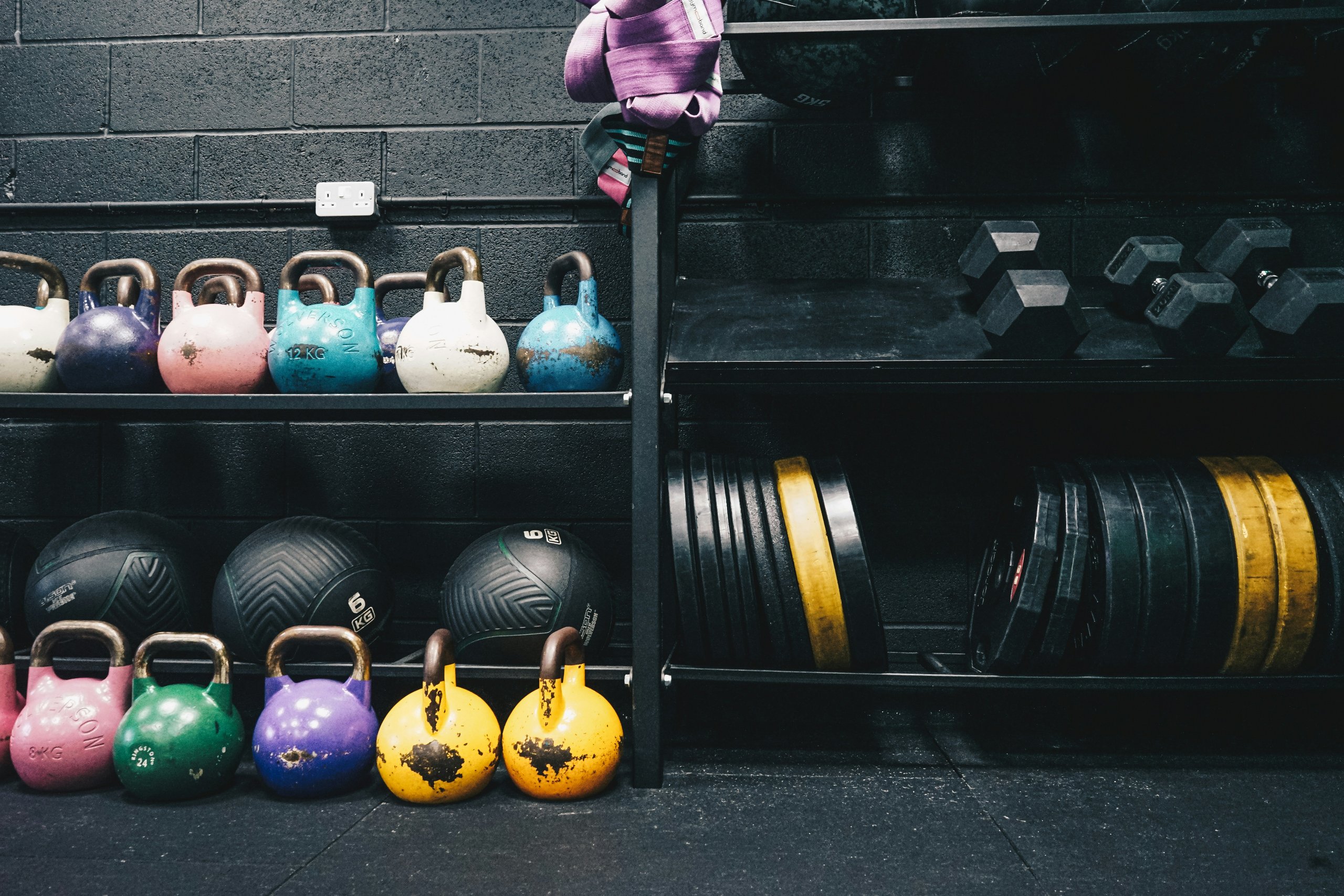
Functional training has moved from niche to mainstream — and for good reason. Kettlebells, medicine balls, resistance bands, battle ropes, and TRX suspension systems are versatile, take up little space, and can be used for group training as well as individual sessions.
This category is also relatively affordable compared to machines, making it a smart early investment for new studios building out their offering gradually.
Group Fitness Equipment
If you run classes — whether HIIT, circuits, yoga, or anything in between — you'll need equipment that works at scale. Mats, light dumbbells, mini resistance bands, and stability balls are the fundamentals. Keep group equipment organised and accessible to make class transitions smooth for both your instructors and members.
Recovery Equipment
Recovery is increasingly part of the gym experience, not an afterthought. Foam rollers, stretching mats, massage balls, and resistance bands for mobility work are low-cost additions that members genuinely appreciate — and that differentiate your studio from a basic box of machines.
If you have the space and budget, dedicated stretching zones signal to members that you care about their full fitness journey, not just the workout itself.
Test Before You Commit
Wherever possible, test equipment before purchasing. Attend trade shows, visit supplier showrooms, or request demo units. What looks good in a brochure can feel clunky in practice, and your members will notice.
Some suppliers will allow trial periods for commercial orders. If that option is available, take it.
Equip Smart, Not Just Well
The best-equipped gym isn't the one with the most gear. It's the one where every piece of equipment earns its floor space, because it's used, well-maintained, and genuinely serves your members.
Start with the essentials. Know your members. Buy commercial grade. And leave room to grow.
Running a gym takes more than great equipment - it takes great systems behind the scenes. 1club helps fitness business owners manage members, schedules, and billing in one place, so you can focus on the experience, not the admin.
Start free - no credit card needed.