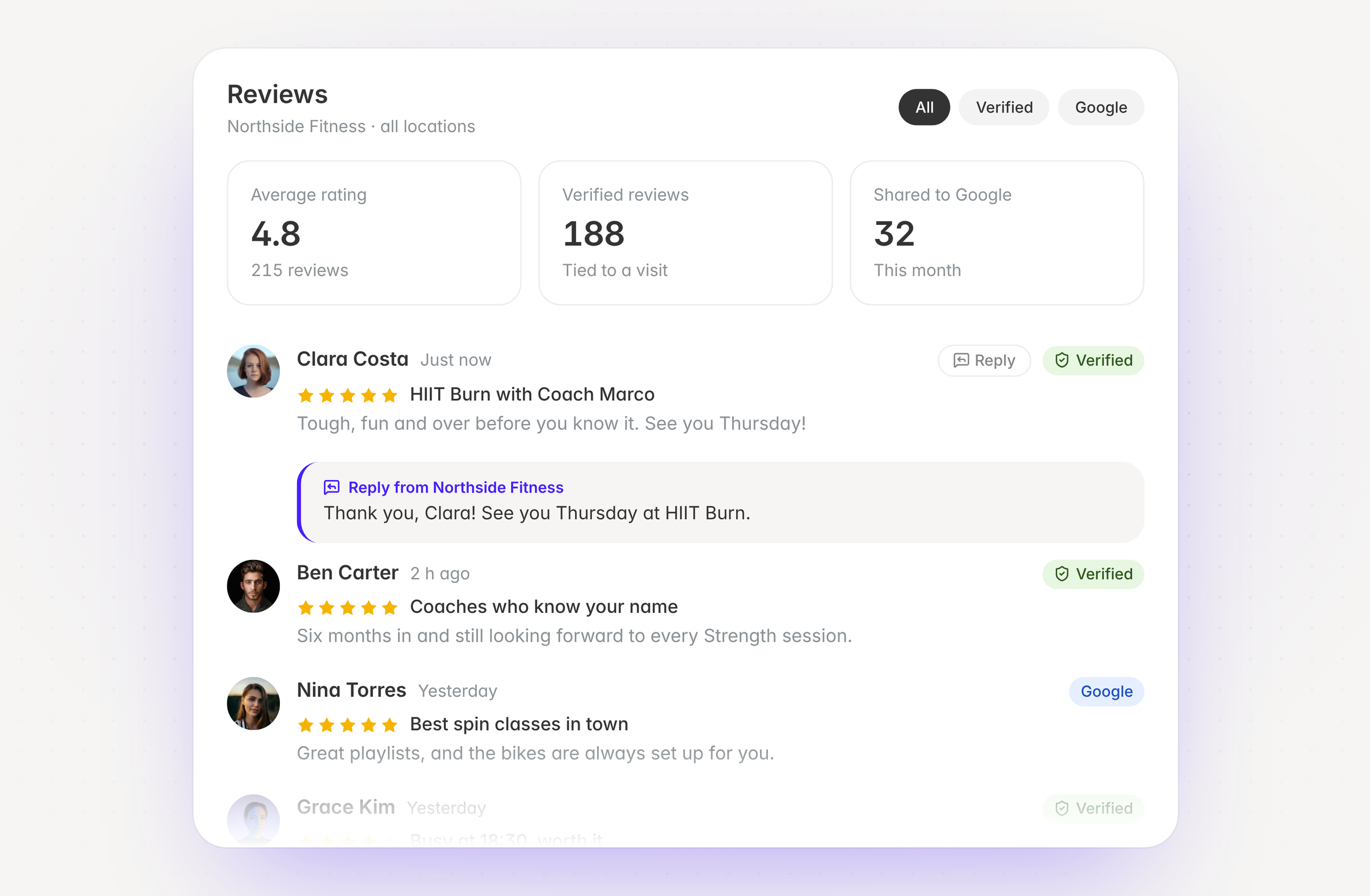
How to Cut Class No-Shows and Late Cancellations

A no-show costs more than one empty spot. Someone on the waitlist missed out, the coach planned for a fuller room, and the member who skipped is one step closer to stopping altogether. Late cancellations do the same damage when they come too late for anyone to take the spot.
This guide is for gyms, studios, martial arts schools and racket clubs. It covers:
- Why members don't show up
- When to send reminders
- How to write a late cancellation policy
- Whether to charge a no-show fee
- How a waitlist fills canceled spots
- How to track repeat no-shows
Why members don't show up
Most no-shows aren't members who don't care. The usual reasons:
- They forgot, or didn't check the time.
- They booked "just in case" to hold a spot in a popular class.
- Their plans changed and canceling felt like a hassle.
- Nothing happens if they don't come, so there is no reason to cancel.
Each reason has a different fix: reminders, a cancellation cutoff, easier canceling and a clear policy.
Reminder timing that cuts no-shows
Reminders are the cheapest fix. A 2023 systematic review in BMC Health Services Research found significant evidence that reminders reduce missed healthcare appointments, whether sent by text, phone or mail. Fitness classes aren't doctor's appointments, but the same habit applies: people forget, and a timely nudge helps.
A simple schedule:
- At booking: a confirmation with the class and time, how to cancel, and a calendar invite so the class goes straight into the member's calendar.
- The evening before: for early morning classes, and for kids' classes, where the parent needs to plan.
- A few hours before: for afternoon and evening classes, early enough that a cancellation can still be filled.
Tell members how to cancel in every reminder. The reminder is often the moment a member realizes they can't make it. If the message points them to the app or member portal, where canceling takes a few taps, they free the spot and someone on the waitlist gets it. If they have to call or message the front desk, many won't bother, and the spot stays empty.
Not sure which timing works best for your members? Change one thing, then compare your no-show rate for the month before and the month after.
How to write a late cancellation policy for fitness classes
A good policy is short, visible and applied consistently. It answers four questions:
- What is the cutoff? The time before class after which canceling counts as late. Pick a window long enough for a waitlisted member to take the spot. Small, popular classes usually need a longer one.
- What counts as a no-show? Booked and didn't check in, without canceling.
- What happens? A fee, a lost class credit or a warning.
- What are the exceptions? Illness, emergencies and a first-time warning keep the policy fair.
An example you can adapt: "Please cancel at least 12 hours before class so someone on the waitlist can take your spot. Late cancellations and no-shows are charged a $10 fee. Your first one is on us. Get in touch if something unexpected came up."
Show the policy on the booking screen, in your membership terms and in the reminder, so nobody can say they didn't know.
Should a gym charge a no-show fee?
A fee is one option, not the only one. Match the consequence to the membership:
| Consequence | Works best for | Watch out for |
|---|---|---|
| A no-show or late-cancel fee | Unlimited memberships, and small classes with scarce spots, such as reformer or private sessions | Needs clear terms and a card on file, and can feel harsh to regulars |
| Forfeit the class credit | Class packs and credit-based memberships | Doesn't affect members on unlimited plans |
| A warning first, then a consequence | Most clubs, especially with new members | Needs tracking so warnings are applied consistently |
A sensible approach for most clubs: give a warning for the first late cancel or no-show, then apply a consequence that matches the membership. Members on class packs lose the credit. Members on unlimited plans have no credit to lose, so a small fee is what makes the policy count for them. Put the rule in your membership terms and on the booking screen, and apply it the same way to everyone. Check local consumer rules before charging fees; this isn't legal advice.
Waitlist automation to fill canceled spots
A cancellation only costs you if the spot stays empty. A waitlist turns it into a booking for someone else:
- Let members join a waitlist when a class is full.
- When someone cancels, invite the next person on the waitlist straight away and give them a short window to claim the spot, such as 15 minutes.
- If they don't claim it in time, pass the invitation to the next person, and keep going until the spot is taken.
- Watch which classes always have a waitlist. They may need a second slot or a bigger room.
You don't have to send these invitations by hand. Club software such as 1club runs the whole sequence automatically, so a spot can be refilled at 11 pm without anyone on your team lifting a finger.
This is also why the cancellation cutoff matters. A member who cancels a day early frees a spot the waitlist can fill. A member who cancels five minutes before class doesn't.
Make canceling easier than not showing up
Many no-shows are members who meant to cancel but didn't get around to it. Remove every step between "I can't make it" and a free spot:
- Say how to cancel in the reminder itself, with a link or a pointer to the app or member portal.
- Let members cancel in the app or member portal any time, without calling or messaging.
- Show the cutoff time on the booking, so members know when canceling stops being free.
How to track repeat no-show members
You can't fix what you don't measure. Each month, look at:
- No-show rate by class: bookings that never checked in, divided by total bookings. A class with a high rate may be at the wrong time.
- No-shows by member: anyone with two or more in the last 30 days.
- Late cancels by member: often an early sign that a schedule has changed.
Then treat repeat no-shows as a conversation, not just a penalty. A new member who keeps missing classes may need help finding a time that fits. A regular who suddenly starts missing classes may be about to leave, which makes it a retention issue. Our guide to gym member retention covers what to do next.
How 1club helps reduce no-shows
In 1club, scheduling is built to keep classes full:
- Members book and cancel classes themselves in the member portal or app, at any time.
- Booking confirmations go out automatically with a calendar invite, followed by reminders before class, on every plan, including Free.
- Members join a waitlist when a class is full. When a spot frees up, the next person is invited to claim it within a short window, 15 minutes for example, and if they don't, the invitation passes to the next person in line.
- Check-ins are recorded on each member's profile, so you can see who booked and didn't come.
- Cancellation rules set your cutoff: a booking policy can refund in full up to a set notice period, such as 24 hours, partly after that and nothing close to the start, and members see the deadline before they book.
- On the paid plans, class performance reporting shows which classes and time slots are underperforming.
- On Grow, a no-show can trigger a follow-up message or a staff task through marketing automation.
Start free with up to 100 active members and no credit card.
Frequently Asked Questions
How can a club reduce class no-shows?
Remind members before class and make it easy to cancel. Set a clear cancellation cutoff, and let a waitlist fill any spot that opens up. Then check your no-shows each month and talk to members who keep missing classes.
What is a fair late cancellation window for fitness classes?
Long enough for a waitlisted member to take the spot, and short enough that members don't feel locked in. Many clubs choose somewhere between a few hours and a day, with longer windows for small, popular classes. Show the cutoff on every booking.
Should a gym charge a no-show fee?
Often, yes. A small fee is the usual consequence for members on unlimited plans, who have no class credit to lose, and for classes where spots are scarce, such as reformer classes or private sessions. Members on class packs can forfeit the credit instead. Warn first, put the rule in your terms and apply it consistently.
When should class reminders go out?
At booking, then again shortly before class: the evening before for early morning classes, or a few hours before for later ones. Say how to cancel, so members who can't come free the spot. Test timing against your own no-show data.
How do waitlists reduce empty spots?
When a booked member cancels, the next person on the waitlist is invited to take the spot and has a short window to claim it. If they don't, the invitation passes to the next person. The class stays full even when plans change, as long as cancellations happen early enough for someone to take the spot.